
The week the AI bill came due · 5-min read
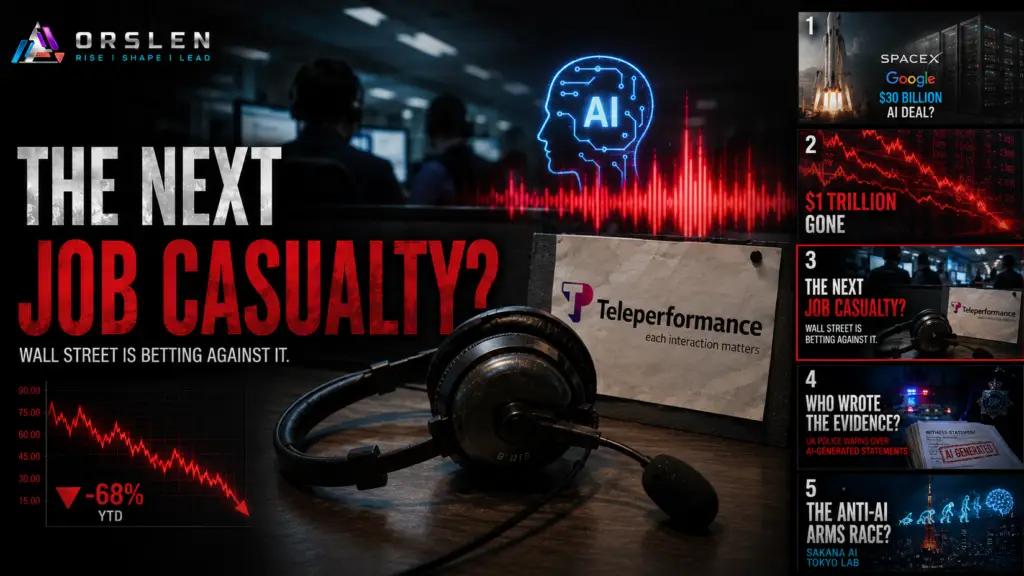
Some days the headlines argue with each other, and Saturday was one of them. One company rented out 110,000 chips like a landlord. A trillion dollars vanished from the very stocks that boom is built on. A call-centre giant got circled by short-sellers, British police were told to stop letting AI write the law’s words, and a small Tokyo lab quietly bet that the whole expensive race is pointing the wrong way. Five stories, one question humming underneath all of them: what is AI actually costing us — and is it worth it? Here they are, explained plainly. (We opened every source ourselves first.)
Table of Contents
1. Elon Musk’s Rocket Company Is Now Google’s AI Landlord
Hawthorne, USA

Here’s a sentence nobody expected to write: the company that lands rockets on barges is now renting computing power to Google. A filing made public on Friday shows SpaceX will give Google access to roughly 110,000 Nvidia chips for $920 million a month, from October 2026 through to June 2029. Do the maths and that’s around $30 billion from a single customer. The chips sit in data centres SpaceX picked up when it swallowed Elon Musk’s AI lab, xAI.
The odd part? Google builds its own chips and its own data centres. It called this a short-term deal to grab “bridge capacity” for its Gemini service while it catches up with demand. Google already owns about 5% of SpaceX, which is expected to go public around June 12 in what could be the biggest stock-market debut ever. When even the firm behind Gemini would rather rent 110,000 chips than wait, you understand why the race for AI hardware is so frantic — and why your subscriptions and cloud bills keep climbing.
Source: Engadget · The Decoder
2. A $1 Trillion Chip Selloff Just Spooked Wall Street
New York, USA

The same chip boom that funds those giant deals just had its worst day in a year. On Friday, US chip stocks lost more than a trillion dollars in market value in a single session. The main chip index fell about 8.5%, its steepest one-day drop since the tariff panic of April 2025. The trigger was Broadcom. It actually beat expectations on sales and profit — but its forecast for AI-chip revenue came in lighter than investors wanted, and it refused to raise its outlook for the year. So everyone sold.
Nvidia slid about 6%, slipping back under a $5 trillion valuation, while AMD, Micron and Qualcomm fell harder. A strong US jobs report made things worse, because it lowers the odds of interest-rate cuts. Here’s the perspective, though: even after the drop, the chip index is still up roughly 75% this year. This matters to you because it’s the first real crack in the “AI only goes up” story. If you hold a pension or an index fund, you own these companies — and the market just showed how fast big hopes can reprice.
Source: Reuters · Yahoo Finance
3. The Call-Centre Giant Wall Street Is Betting Against
Paris, France
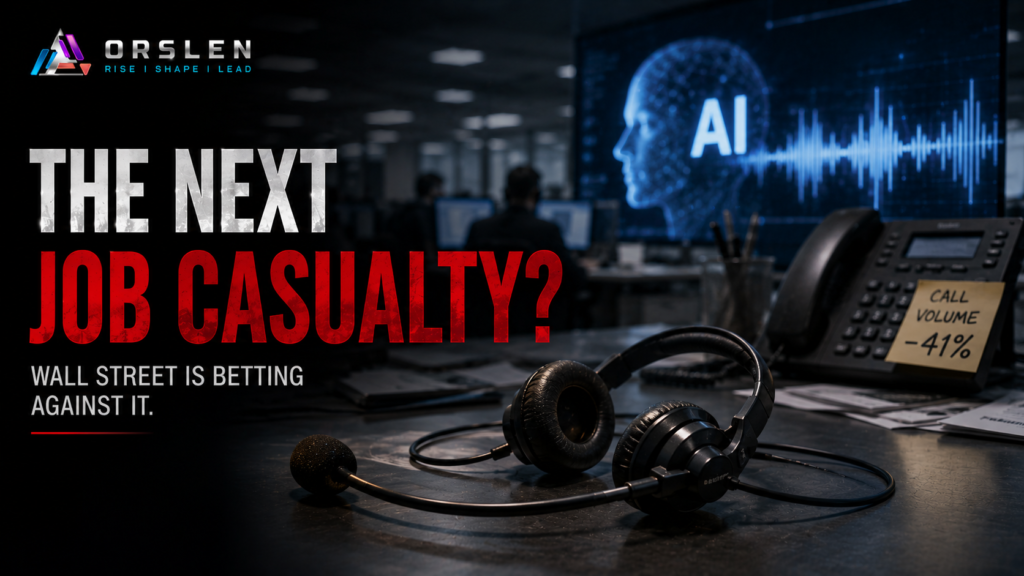
Want to see what AI disruption looks like on a stock chart? Look at the company behind the world’s “press one for support” lines. Teleperformance, the biggest outsourced customer-service firm on the planet, has become one of Europe’s most shorted stocks. Heavyweight hedge funds — Marshall Wace, Point72, Citadel and Squarepoint among them — are placing bets that its share price will keep falling. The reasoning is brutally simple: its whole business is paying hundreds of thousands of people to handle calls and chats, which is exactly the work AI voice bots are starting to do.
The French firm was already dropped from the CAC 40 index last year, rivals like Concentrix and TTEC have slumped, and even its debt is under strain. Not everyone is convinced — Barclays argues the sector has been written off too quickly, and Teleperformance is busy bolting AI onto its own services rather than being replaced by it. Either way, this is one of the earliest, clearest tests of how markets and bosses react when a people-heavy industry meets automation. If your work is repetitive and scriptable, watch this one closely.
4. UK Police Told: Stop Letting AI Write Court Statements
London, UK

Imagine being charged with a crime partly on the strength of a witness statement that an AI quietly made up. That’s the fear behind a new instruction in England and Wales: a senior officer has told police forces to stop using everyday AI tools to help draft court statements. The worry is “hallucinations” — the confident, invented details these tools sometimes produce — slipping into legal cases and contaminating them. Some forces had started leaning on tools like Microsoft’s Copilot before they’d properly tested them.
Their main safeguard was a policy telling officers to check everything the tool produces. Critics say that’s no safeguard at all: once people trust a machine, they skim instead of reading, and checking facts properly is slow, hard work. Britain is still pouring money into police AI, so this is a brake being tapped, not a U-turn. But it matters far beyond the UK. Court statements decide who gets charged and convicted — and this is a rare case of someone in power saying “slow down” before the damage is done, and insisting a human, not an AI, owns the words.
Source: Financial Times
5. Tokyo’s Quiet Bet Against the Whole AI Arms Race
Tokyo, Japan

While the giants spend a trillion dollars buying chips, one Japanese lab thinks the entire approach is wrong. Sakana AI — co-founded by Llion Jones, one of the inventors of the “Transformer” technology that underpins modern AI — has launched a new Tokyo lab built around a bold idea: AI that improves itself. Instead of brute-forcing progress with ever-bigger, ever-pricier models, the team is chasing clever, evolution-inspired systems that can get smarter on modest, affordable computing power.
They argue it isn’t just theory. They point to past projects, including agents that rewrite their own code and an “AI Scientist” whose work was published in the journal Nature in March. Their stated goal is to make this kind of progress a shared public good, not something locked inside a handful of enormous, mostly American data centres. Why care? Because if they’re right, the future of AI won’t be decided purely by whoever can rent the most Nvidia chips. It could stay open to smaller teams, smaller countries and ordinary builders — and that changes who gets to shape the defining technology of our era.
Source: Sakana AI · The Decoder
The One Thing to Take Away
One thread runs through all five stories: the world has finally started arguing about the true cost of AI. The cost in money — a $30 billion rental, a trillion-dollar market wobble in an afternoon. The cost in jobs, as a call-centre giant gets circled by short-sellers. The cost in trust, with police told to stop letting AI write the law’s words. And a quiet bet from Tokyo that the whole expensive race might be the wrong race entirely. The hype phase is ending. The reckoning — who pays, who profits, and who gets protected — is just getting started.
ORSLEN – Signal over Noise!